How to Paint Glass and Reflections in Oils
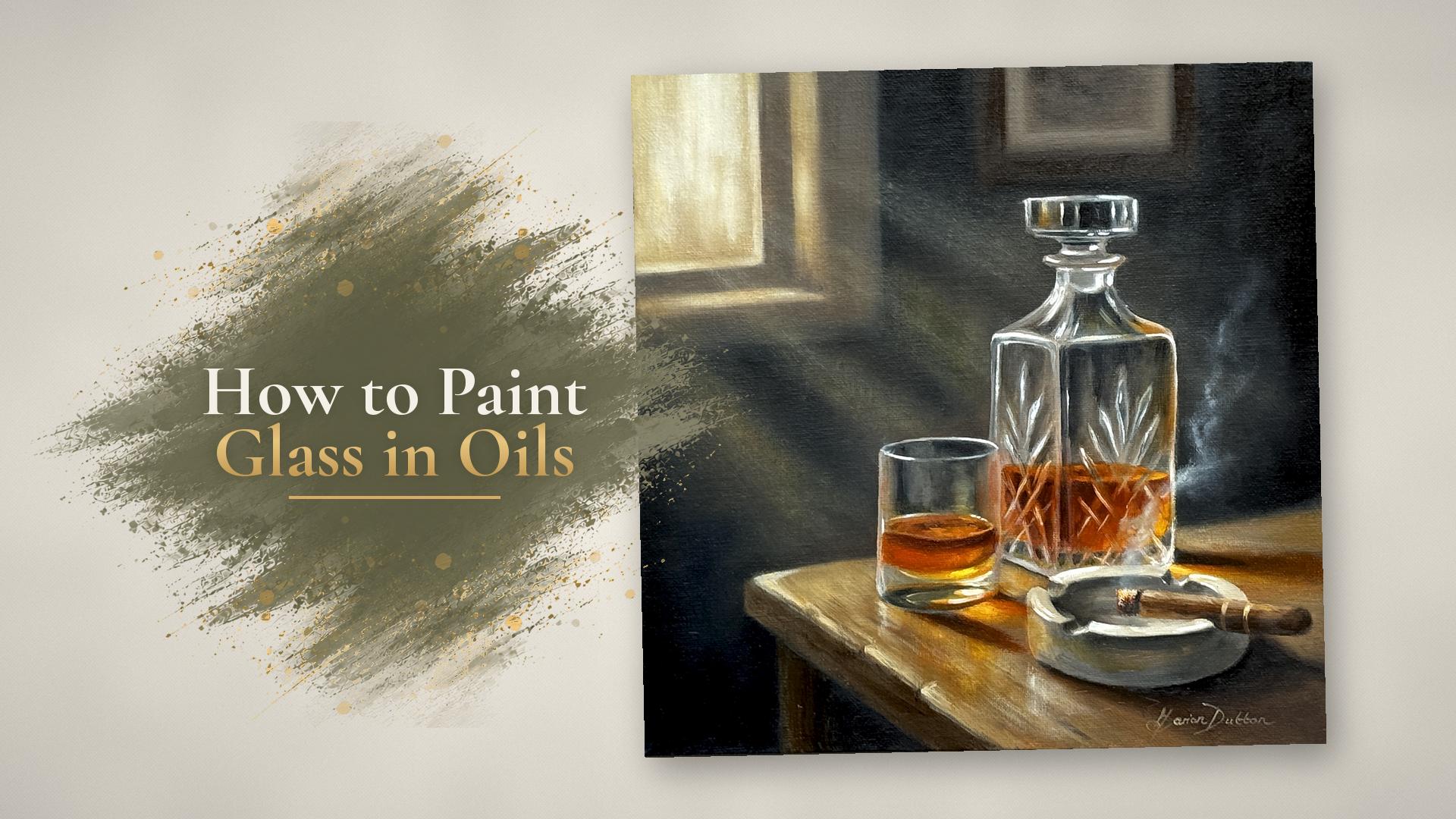
People often tell me glass is the thing they're most scared to paint. I get it. It's see-through, it's shiny, and it seems to change every time you move your head.
But glass isn't really a colour of its own. It borrows everything around it. Once you stop trying to paint "glass" and start painting the shapes of light and dark you can actually see, it gets so much easier.
Paint what's behind it
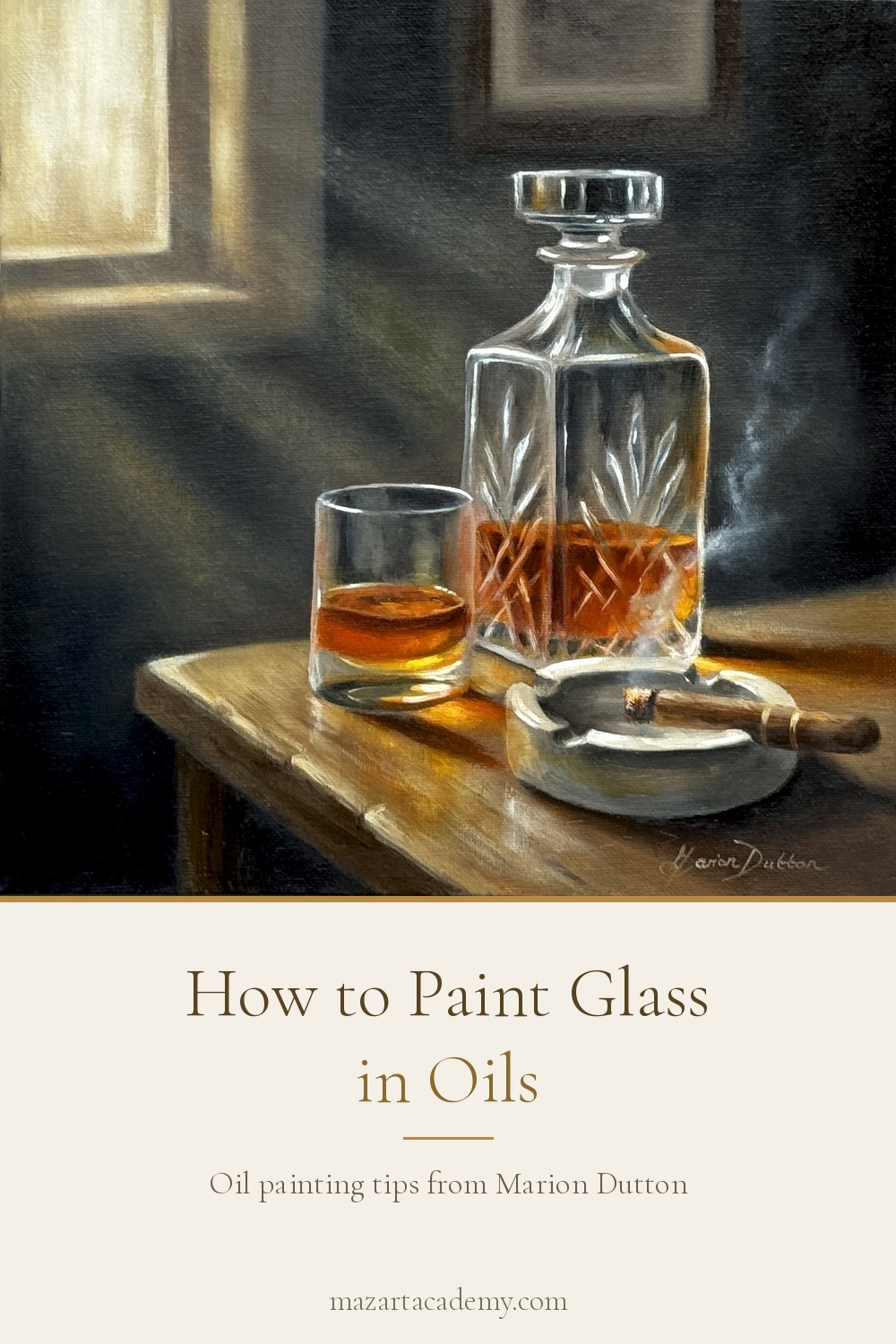
Look through the glass, not at it. In my Quiet Measure still life, the whisky glass and decanter are mostly made of the warm table, the dark background and the amber whisky, all slightly bent and broken up. Paint those shapes and the glass starts to appear by itself.
Get your tonal values right first
Same as everything I paint, it starts with an underpainting. I map out the lights and darks in one colour before I think about anything else. Glass is all contrast, so if your tonal values are right in the underpainting, you're most of the way there.
Look for hard and soft edges
Glass has some of the sharpest edges in a painting, especially where a highlight sits on a rim. But not every edge is sharp. Where the glass melts into a dark background, let it soften. The mix of the two is what makes it look real.
Save the brightest highlights for last
Those little sparkles are the fun bit, so it's tempting to put them in early. Don't. Add them at the very end, in the detail layers, with a small brush and a confident touch. A few in the right place does far more than lots everywhere.
Want to practise?
My free Blue Glass Reflections tracing pack is a lovely one to try these ideas on. And Quiet Measure is one of my still life lessons inside MazArt Academy, where I take you through the whole painting step by step.
Save it for later
Want to come back to this? Pin the image below to your Pinterest board.